Court Admissible DNA Paternity Test
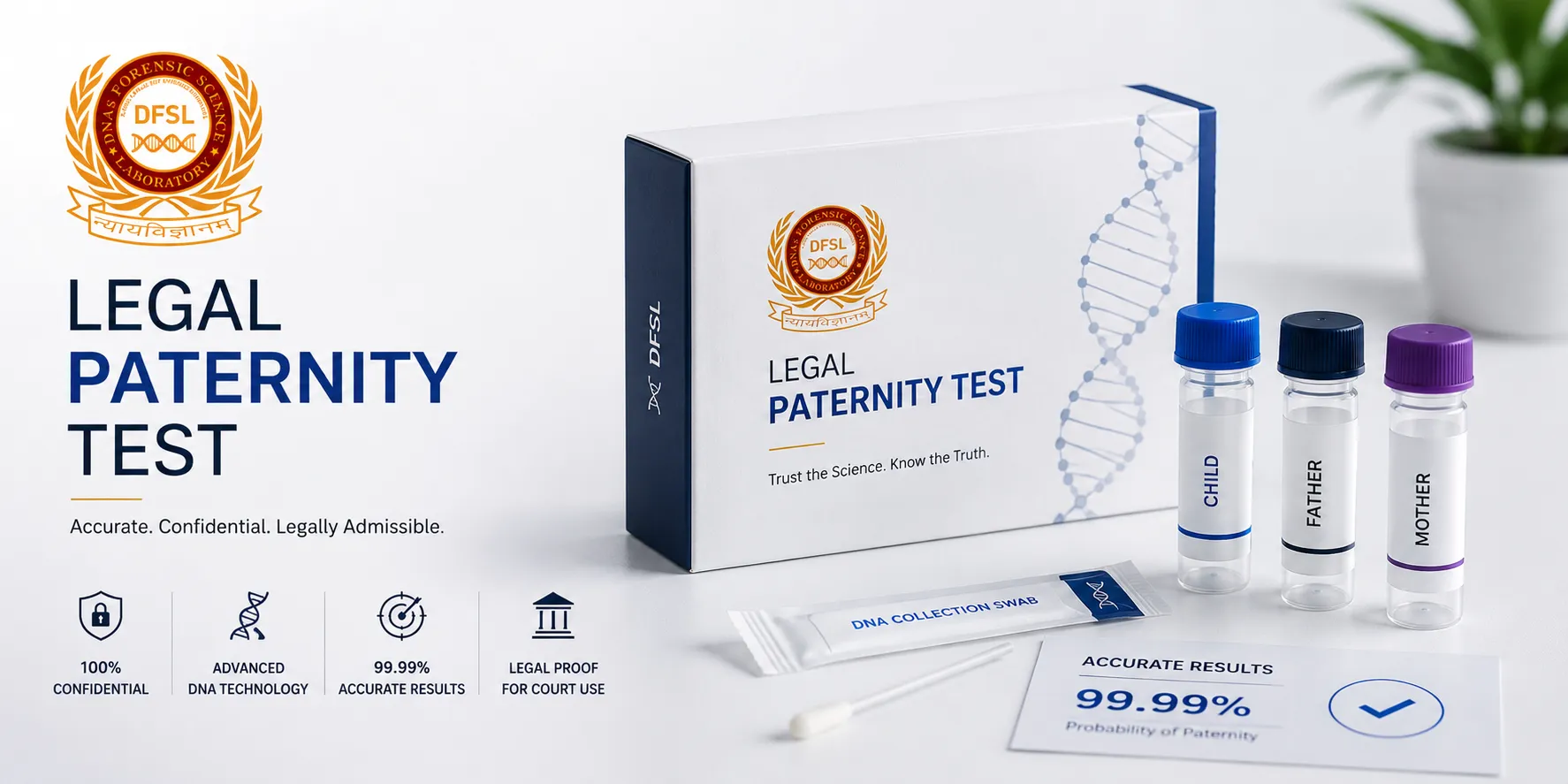
Court Admissible DNA Paternity Test in India
Legal DNA Paternity Testing for Establishing Biological Fatherhood
Are you looking for a Court Admissible DNA Paternity Test in India? DNAS Forensic Science Laboratory provides legal DNA paternity testing services to help establish biological fatherhood through scientific DNA analysis and documented sample collection procedures.
A court-related paternity DNA test may be required in matters involving disputed parentage, family disputes, inheritance claims, maintenance proceedings or other legal matters. Unlike a private Peace-of-Mind DNA Test, a legal paternity test follows an identification and sample-handling process designed to maintain the integrity and traceability of the samples.
At DNAS Forensic Science Laboratory, our team can guide you through the legal DNA testing procedure, sample requirements and documentation needed for your case.
What Is a Court Admissible DNA Paternity Test?
A Court Admissible DNA Paternity Test is a legal DNA examination used to evaluate whether an alleged father is the biological father of a child.
The laboratory compares DNA profiles obtained from the child and the alleged father. Specific genetic markers are examined to determine whether the DNA findings support or exclude the alleged biological relationship.
For legal testing, the process involves appropriate identity verification, documented sample collection, sample labelling, sealing and chain-of-custody records. These procedures help establish that the samples analysed belong to the identified individuals and have been properly tracked.
Important: Whether a DNA report is accepted as evidence depends on the applicable legal requirements and the court's assessment. A laboratory cannot guarantee that a particular report will be admitted or accepted in every case.
Why Is Legal Paternity DNA Testing Required?
A legal paternity DNA test may be requested in situations such as:
- Disputed biological fatherhood
- Family and matrimonial disputes
- Child maintenance proceedings
- Inheritance and succession-related matters
- Parentage verification for official purposes
- Other legal matters requiring biological relationship assessment
The exact testing procedure may vary according to the purpose of the test and any instructions issued by the concerned authority or court.
How Is a Court Admissible Paternity DNA Test Different from a Private DNA Test?
The main difference is the sample collection and documentation procedure.
Legal Paternity DNA Test
- Identity verification of the participants
- Documented consent and relevant paperwork
- Sample collection through an authorised or designated collection process
- Proper sample identification, sealing and documentation
- Chain-of-custody records
- Laboratory DNA profiling and a formal report
Peace-of-Mind Paternity DNA Test
- Intended for personal knowledge
- May involve self-collected samples
- Does not ordinarily include independent identity verification
- Does not maintain the same legal chain-of-custody documentation
- Not intended to establish legal evidence
If you need the report for a court case, select the legal testing procedure before sample collection.
How Does the Legal DNA Paternity Testing Process Work?
Step 1 – Initial Consultation
Contact DNAS Forensic Science Laboratory and explain the purpose of your paternity DNA test. Share any relevant court instructions or documentation so the appropriate procedure can be discussed.
Step 2 – Identity Verification
The identities of the individuals participating in the test are checked according to the applicable collection requirements.
Step 3 – Legal DNA Sample Collection
DNA samples are collected using the prescribed procedure. Buccal swabs, collected from the inside of the cheek, are commonly used for paternity testing.
Step 4 – Sample Sealing and Chain of Custody
The samples are identified, labelled, sealed and documented. The chain-of-custody record helps track the handling and transfer of samples throughout the process.
Step 5 – Laboratory DNA Analysis
The laboratory extracts and examines DNA profiles from the submitted samples. Relevant genetic markers are compared to evaluate the biological relationship.
Step 6 – Preparation of the DNA Report
After completion of the examination, a formal laboratory report is prepared with the findings of the paternity DNA analysis.
What Samples Are Required for a Legal Paternity DNA Test?
For a standard paternity examination, samples are generally required from:
- The child
- The alleged biological father
The mother's sample may also be included when appropriate. Her DNA profile can provide additional information for the genetic comparison.
The sample collection method and documentation must follow the requirements applicable to the case.
Is a Court Order Required for a Legal Paternity DNA Test?
The requirement for a court order depends on the circumstances and purpose of the test. Some official or court-directed cases require a specific order or prescribed procedure.
If your DNA test is connected with an ongoing court matter, consult your lawyer and share the relevant instructions with the laboratory before arranging sample collection. Do not assume that a privately arranged DNA test will automatically meet the requirements of a court proceeding.
Can a Court Admissible DNA Test Be Used in Family Court?
DNA paternity testing may be relevant in legal disputes involving biological parentage. However, the decision to direct DNA testing and the acceptance or evidentiary value of a report depend on the facts of the case and the applicable law.
The court may consider the purpose of testing, the rights and privacy of the individuals involved, the sample collection process and the reliability of the laboratory examination.
Why Choose DNAS Forensic Science Laboratory?
DNAS Forensic Science Laboratory provides DNA testing and forensic examination services. For legal paternity testing, the process focuses on proper sample identification, documentation and scientific examination.
- Legal DNA testing guidance
- Identity verification procedures
- Documented sample collection
- Chain-of-custody documentation
- Scientific DNA profile comparison
- Formal laboratory reporting
- Guidance from the forensic expert team
Book a Court Admissible DNA Paternity Test in India
If you require a Legal Paternity DNA Test in India, contact DNAS Forensic Science Laboratory before arranging sample collection. Our team can explain the testing procedure, documentation requirements and available sample collection arrangements according to your case.
Contact DNAS Forensic Science Laboratory
Phone: +91 9625899413
Email: info@dnaforensicsciencelaboratory.com
Website: https://www.dnaforensicsciencelaboratory.com/
DNAS Forensic Science Laboratory – DNA Testing and Forensic Expertise.
Frequently Asked Questions – Court Admissible DNA Paternity Test
1. What is a court admissible DNA paternity test?
It is a paternity DNA examination conducted with identity verification, documented sample collection and chain-of-custody procedures for potential use in legal proceedings.
2. Is a private paternity DNA test accepted in court?
A private test using self-collected samples may not meet legal identification and chain-of-custody requirements. If you need testing for court proceedings, arrange a legal DNA test in advance.
3. Is a court order necessary for legal paternity testing?
It depends on the case and the applicable legal requirements. Court-directed testing may require a specific order and procedure. Consult your lawyer before arranging the test.
4. What is chain of custody in DNA testing?
Chain of custody is the documented record of sample identification, collection, sealing, transfer, receipt and handling. It helps maintain the traceability and integrity of the samples.
5. Can a DNA paternity report be used in family court?
A DNA report may be relevant in a family court matter, but its acceptance and evidentiary value depend on the court's assessment and applicable legal requirements.
6. Does the mother need to provide a DNA sample?
The mother's sample is not always necessary for a standard paternity comparison. However, it may provide additional genetic information and may be required by the specific testing instructions.
7. What type of sample is collected for a legal paternity DNA test?
Buccal swabs are commonly used. The collection method must follow the documented procedure applicable to the case.
8. How long does a legal paternity DNA test take?
The reporting time depends on sample collection, receipt, documentation and laboratory processing. Contact DNAS Forensic Science Laboratory for the current turnaround time for your case.
9. Does a court admissible DNA test guarantee acceptance by the court?
No laboratory can guarantee acceptance in every case. The court determines admissibility and evidentiary value based on applicable law, case circumstances and the testing documentation.
How It Works
Book Appointment
Sample Collection
Lab Analysis
Get Your Report
- Turnaround Time2-5 working days
- Court AdmissibleYes
100% Confidential